
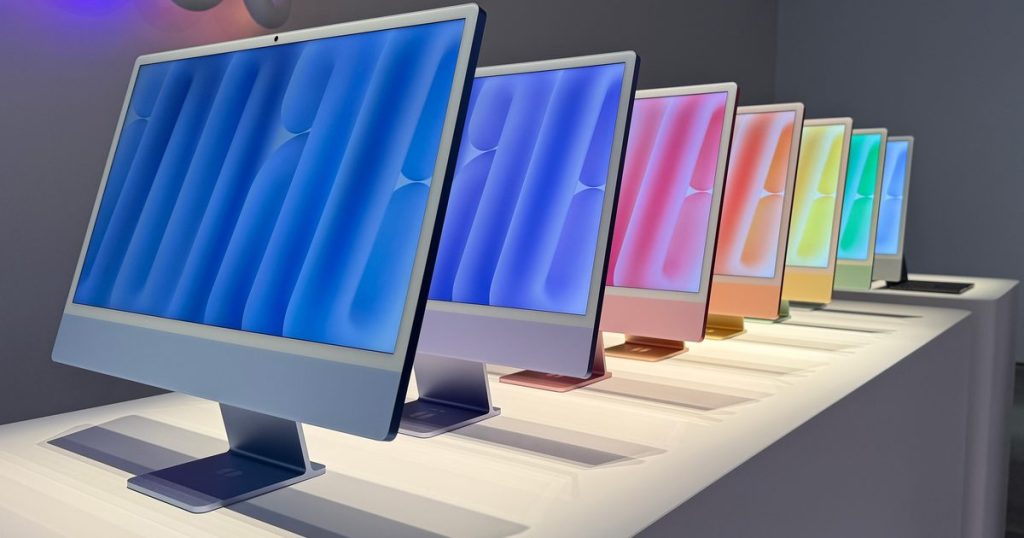
If you are planning to upgrade your desktop hardware, Apple’s product roadmap offers crucial context for your next purchase. Reports indicate that a refreshed 24-inch iMac powered by the upcoming M6 processor is scheduled to arrive before late 2026, though dramatic design alterations are not on the immediate horizon.
This breakdown details Apple’s planned late-2026 iMac update, focusing on the baseline M6 chip transition, graphic and Neural Engine enhancements, fresh color choices, and future display timelines. It serves tech buyers, creative professionals, and budget planners evaluating whether to purchase current desktop hardware or wait for upcoming models.
| Feature Focus | Expected M6 iMac Specifications |
|---|---|
| Expected Release | Late 2026 (Likely October or November) |
| Processor Architecture | Baseline M6 Chip (Skip Pro/Max variants) |
| Key Improvements | Up to 12-core GPU, higher memory bandwidth, updated Neural Engine |
| Form Factor & Display | Retained 24-inch design with new color variants |
| Future OLED Roadmap | Targeted for approximately 2029 |
Silicon Upgrades Take Center Stage
According to Bloomberg reporter Mark Gurman, the focal point of the upcoming iMac update is internal processing power rather than external restructuring. Apple is expected to retain the established 24-inch chassis design while introducing updated color choices to distinguish the new line.
The processing architecture presents an unusual strategy for Apple. Insights suggest the manufacturer will launch only a baseline M6 chip variant, temporarily skipping Pro, Max, and Ultra tiers before introducing a complete M7 lineup in 2027. Because the entry-level 24-inch desktop platform targets everyday computing rather than heavy workstation loads, baseline silicon remains an ideal fit.
Despite lacking high-end tier variants, the standard M6 architecture should deliver noticeable performance gains. Prospective buyers can expect increased memory bandwidth, an enhanced Neural Engine tailored for artificial intelligence tasks, and integrated graphics configurations scaling up to 12 cores.
Larger Displays and OLED Panels Remain Years Away
Users hoping for a larger display option or advanced screen technology will need to exercise patience. Apple continues internal testing for larger desktop forms, but display panel suppliers like Samsung Display and LG Display are currently developing 24-inch OLED screens slated for launch around 2029.
Consequently, the 2026 release will stay focused on core internal efficiency rather than panel innovation. Customers seeking bigger workspace geometry or extreme contrast panels will not find those options in this release cycle.
Expected Timeline and Purchase Considerations
Launch timing will likely mirror previous desktop announcements rather than sharing the stage with flagship smartphone updates. Historically, Apple announced the M4 desktop revision in late October for an early November release. A similar pattern points toward an October or November debut for the M6 iMac.
Financial timing is another factor to weigh carefully. Apple previously adjusted the starting price of the baseline M4 model upwards from $1,299 to $1,499. Unless retail discounts lower the entry cost of existing inventory, waiting to assess the performance jump offered by the M6 revision represents a practical choice for prospective desktop buyers.
Frequently Asked Questions
When is the M6 iMac expected to launch?
Current supply chain updates point to a release before the end of 2026, with an announcement expected during the autumn window around October or November.
Will the upcoming iMac feature an OLED display or a larger screen size?
No. The 2026 refresh will retain the current 24-inch LCD design, while specialized OLED panels are not anticipated to enter production for the desktop line until around 2029.
Why is Apple only releasing a baseline M6 chip for this model?
Reports suggest Apple is adjusting its chip release cadence by focusing on baseline M6 silicon before introducing a broader range of Pro and Max configurations with the subsequent M7 generation.