
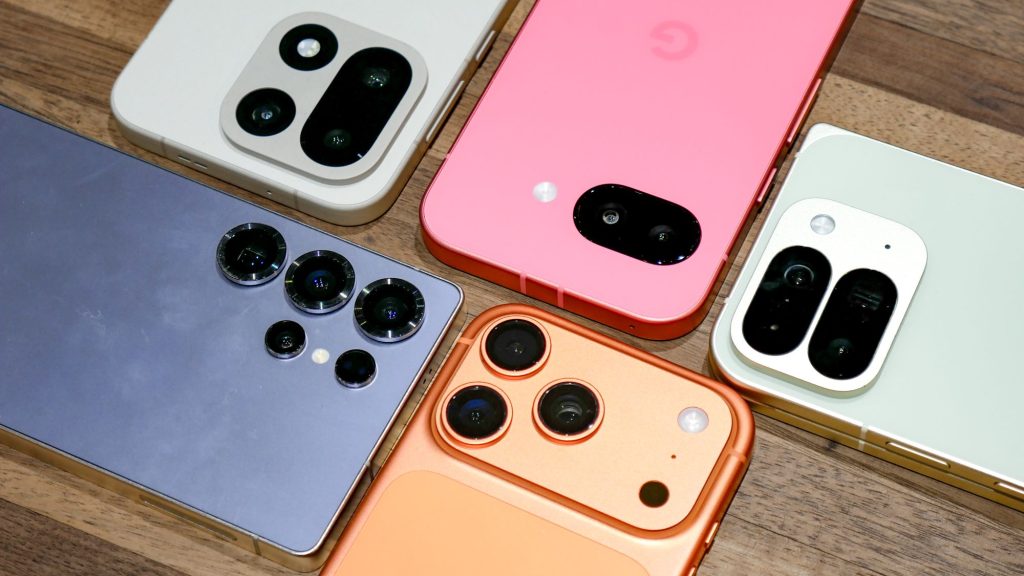
Choosing a mobile device purely for its photo capabilities can feel overwhelming when almost every modern phone captures decent photos. However, putting these devices through rigorous real-world testing quickly reveals clear distinctions in low-light clarity, optical zoom depth, and software editing capabilities.
This hands-on evaluation breaks down the top smartphone cameras based on low-light clarity, optical zoom performance, and video stability. Covering the flagship Samsung Galaxy S26 Ultra, the versatile Apple iPhone 17 Pro, and the affordable Google Pixel 10a, it provides objective comparisons to help photographers choose the ideal mobile device.
Top Camera Phones at a Glance
Below is a direct comparison of the primary technical specifications, battery performance, and key highlights for each leading camera phone model tested.
| Model | Rear Camera System | Front Camera | Battery Life | Starting Price / Category |
|---|---|---|---|---|
| Samsung Galaxy S26 Ultra | 200MP main (f/1.4), 50MP telephoto (5x, f/2.9), 10MP telephoto (3x, f/2.4), 50MP ultrawide (f/1.9) | 12MP (f/2.2) | 16:10 | Flagship / Best Overall |
| Apple iPhone 17 Pro | 48MP main (f/1.78), 48MP ultrawide (f/2.8), 48MP telephoto (4x, f/2.8) | 18MP Center Stage (f/1.9) | 15:32 | Premium / Best iPhone |
| Google Pixel 10a | 48MP main (f/1.7), 13MP ultrawide (f/2.2) | 13MP (f/2.2) | 15:16 | $499 / Best Budget |
1. Samsung Galaxy S26 Ultra – Best Overall Camera Phone
The Samsung Galaxy S26 Ultra takes top honors due to notable advancements in nighttime imaging and long-distance zoom clarity. Samsung upgraded the main 200MP sensor and the 50MP 5x telephoto lens with wider apertures, increasing light capture by up to 47% and 37% respectively. This reduction in image noise delivers significantly cleaner exposures indoors and after dark compared to rival devices.
Zoom performance remains another key advantage. The dual telephoto configuration maintains texture detail and sharpness at 10x magnification and beyond, outperforming competing devices that rely purely on digital crop algorithms. For video creators, the addition of Horizon Lock ensures footage stays level during active movement, while 8K recording capability provides substantial cropping flexibility in post-production.
Pros: Excellent low-light output, Horizon Lock video stabilization, versatile zoom range, long battery life (16 hours 10 minutes).
Cons: Noticeable rear camera bump, high price point.
2. Apple iPhone 17 Pro – Best iPhone for Photography
For iOS users, the Apple iPhone 17 Pro delivers high image quality in a comfortable 6.3-inch form factor. Apple updated the telephoto hardware to a 48MP sensor featuring 4x optical zoom, delivering crisp details at 4x and 8x settings. The rear camera array produces accurate color rendition and balanced dynamic range across varied lighting conditions.
Selfie shooting receives a noticeable upgrade with the 18MP Center Stage front camera, which offers automatic framing for group compositions regardless of orientation. Combined with a dedicated physical Camera Control button for quick shutter access and Dual Capture video recording, the iPhone 17 Pro serves as an efficient tool for casual users and mobile content creators alike.
Pros: Class-leading performance with the A19 Pro chip, natural color processing, versatile 18MP front camera, tactile Camera Control button.
Cons: Image detail softens beyond 10x digital zoom, modest price increase over previous generations.
3. Google Pixel 10a – Best Low-Cost Camera Phone
Priced at $499, the Google Pixel 10a demonstrates that image processing software can compensate for mid-range hardware. Retaining the 48MP main sensor and 13MP ultrawide camera from prior models, the phone relies on Google’s Tensor G4 silicon and computational algorithms to produce pictures with natural exposures and accurate skin tones.
The device stands out with integrated AI tools such as Camera Coach, which offers real-time composition advice, and Auto Best Take, which combines multiple facial expressions for group shots. Unlike single-camera budget competitors, the inclusion of an ultrawide sensor gives shooters extra flexibility for wide landscapes and tight indoor shots, while a seven-year software support commitment adds strong long-term value.
Pros: Flagship-grade main image processing under $500, dedicated ultrawide camera, useful AI editing suite, seven years of OS updates.
Cons: Unchanged camera hardware from previous model, display brightness is average outdoors.
How to Choose the Right Camera Phone
Finding the ideal camera phone depends on individual shooting habits, preferred features, and overall budget. Here are key factors to evaluate before purchasing:
- Lens Setup & Budget: Flagship devices priced around $1,000 generally feature triple or quad-camera systems with dedicated telephoto lenses. Mid-range options under $500 usually stick to dual-camera layouts (main and ultrawide), which still handle standard photography exceptionally well.
- Aperture and Sensor Size: Do not rely solely on megapixel ratings. Wider lens apertures (such as f/1.4 or f/1.7) allow more light onto the sensor, directly improving nighttime clarity and background blur without relying on artificial portrait filters.
- Pro Features & Form Factors: Content creators should check for advanced features such as RAW photo capture, flat LOG video profiles, and manual controls. Additionally, foldable devices offer unique self-framing opportunities using their cover screens.
Frequently Asked Questions
Which camera phone performs best in low-light environments?
The Samsung Galaxy S26 Ultra currently leads in low-light performance due to its expanded f/1.4 aperture on the primary 200MP sensor. This physical hardware enhancement allows significantly more light to reach the sensor, resulting in brighter nighttime shots with lower digital noise.
Are higher megapixel counts better for smartphone photos?
Not necessarily. While high megapixel counts allow for detailed cropping in bright light, sensor size, lens aperture quality, and software algorithms play larger roles in determining overall image sharpness, color accuracy, and low-light dynamic range.
Is an optical zoom lens better than digital zoom?
Yes, optical zoom relies on actual physical optics to magnify distant subjects without degrading image resolution. Digital zoom crops into a portion of the image sensor, which frequently causes softer textures and increased visible digital noise at higher magnification levels.