
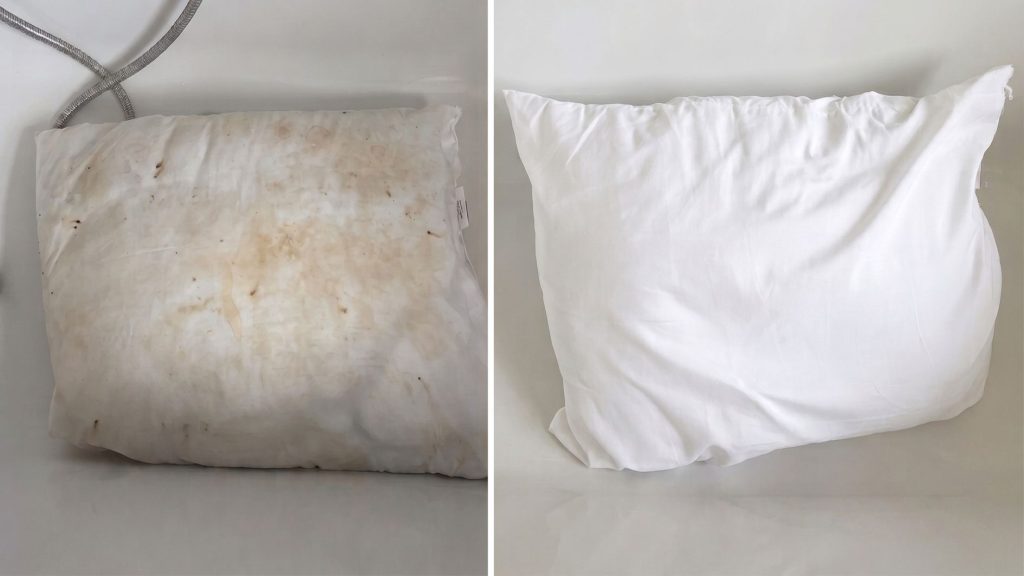
Over time, everyday sweat, body oils, and skincare products seep through pillowcases, leaving behind unsightly yellow oxidation stains on your bedding. While standard laundering often fails to lift this deeply embedded discoloration, a basic first-aid solution provides a safe, inexpensive, and highly effective restoration fix.
This practical guide demonstrates how 3% hydrogen peroxide lifts stubborn yellow stains from washable pillows without damaging fabric integrity. By combining a targeted 30-minute spray treatment, gentle scrubbing, and a standard laundry cycle, discolored pillows can be restored to a bright, pristine finish for roughly one dollar.
Why 3% Hydrogen Peroxide Works on Pillow Stains
Antiseptic 3% hydrogen peroxide is a common medicine cabinet item that doubles as an exceptional stain-removing agent. Because yellow pillow stains are primarily caused by oxidized organic matter—such as sweat, sebum, and cosmetics—hydrogen peroxide acts as a mild oxidizing agent that breaks down those stubborn chemical bonds.
Unlike harsh commercial bleaches, a standard 3% solution is gentle enough for white cotton and polyester bedding while still delivering powerful stain-lifting properties. Textile experts frequently recommend it over complex chemical concoctions due to its low cost and high efficacy.
| Cleaning Method | Effectiveness | Target Stains | Key Considerations |
|---|---|---|---|
| 3% Hydrogen Peroxide | High | Oxidized sweat, body oils, saliva | Affordable ($1), safe for white fabrics, low effort |
| Lemon Juice Soak | Moderate | Light discoloration | Citric acid degrades fabric fibers over time |
| Shaving Foam | Low | Surface grime only | Fails to lift deep-set organic oxidation |
| Vodka Mist | Low | Odors only | Does not remove yellowing or dark stains |
Essential Safety Guidelines Before Cleaning
Prior to treating your bedding, always check the manufacturer’s care label. Ensure your pillow is machine washable and capable of handling mild liquid spot treatments.
Always stick strictly to a 3% hydrogen peroxide concentration. Never mix hydrogen peroxide with bleach, ammonia, or other household chemicals. Because hydrogen peroxide has a mild lightening effect, avoid using it on dark-colored fabrics or delicate materials such as silk, wool, and cashmere. Wearing protective gloves during application is recommended to avoid minor skin irritation.
Step-by-Step Pillow Restoration Process
Restoring discolored bedding requires minimal equipment: a standard spray bottle, an old toothbrush, 3% hydrogen peroxide, and your home washing machine.
1. Apply the Spot Treatment
Place the discolored pillow inside a clean, empty bathtub or utility sink to contain any excess liquid. Fill an empty spray bottle with 3% hydrogen peroxide and generously mist all yellowed areas until the fabric is thoroughly saturated. Allow the solution to sit undisturbed for 30 minutes to break down the set-in oils.
2. Agitate the Stains
After the half-hour dwell time, take a clean toothbrush or electric toothbrush soft head and scrub the saturated areas. Gentle circular motions help work the liquid deep into the textile fibers, causing stubborn residue to break apart and lift away from the shell.
3. Machine Wash and Dry
Place the pre-treated pillow into your washing machine and run a standard one-hour wash cycle using your regular laundry detergent, following the fabric care label for water temperature. Once washed, press excess moisture out with a clean, light-colored towel. Transfer the pillow to the dryer alongside three clean tennis balls to restore full fluffiness and loft during the drying cycle.
Preventative Care and Essential Maintenance Tools
Once your bedding is clear of stains, preventative measures keep it white longer. A bottle of up&up 3% Hydrogen Peroxide Multipurpose Cleaner from Target costs under $1 and serves as an ideal stain treatment. Pair it with a reusable two-pack of Teyssor Spray Bottles for easy application across home cleaning tasks.
To avoid future yellowing entirely, invest in high-quality encasements like Utopia Bedding Waterproof Pillow Protectors. Zippered protectors form a complete barrier against sweat, dust mites, and skin oils, keeping internal pillow fibers dry and stain-free for years.
Popular Pillow Cleaning Hacks to Avoid
While social media platforms frequently promote alternative home hacks, many fall short or risk damaging bedding materials:
- Shaving Foam: Disappoints on oxidized organic stains and leaves soapy residue embedded inside pillow fill.
- Vodka Spritzes: May temporarily neutralize surface odors, but completely fails to remove yellow discoloration.
- Lemon Slice Soaks: Contain high concentrations of citric acid, which can gradually erode fabric strength and weaken seams over time.
- Baking Soda Paste: Works adequately on some cottons, but should never be applied to memory foam pillows as fine particles get trapped inside foam pores.
Frequently Asked Questions
Why do white pillows turn yellow over time?
Yellowing occurs when moisture from sweat, saliva, scalp oils, and skin products penetrates the pillowcase and reaches the inner fabric. As these organic compounds are exposed to air, they oxidize, leaving behind dark yellow or brownish stains.
Is 3% hydrogen peroxide safe for all pillow types?
It is safe for most washable white cotton, feather, and synthetic fiberfill pillows. However, it should not be applied to dark-colored bedding, silk, wool, or non-washable memory foam blocks.
How often should pillows be cleaned?
Pillowcases should be washed weekly, while protective zippered covers should be washed monthly. Deep-clean the actual pillows every three to six months to prevent deep-set oil accumulation and keep materials fresh.