
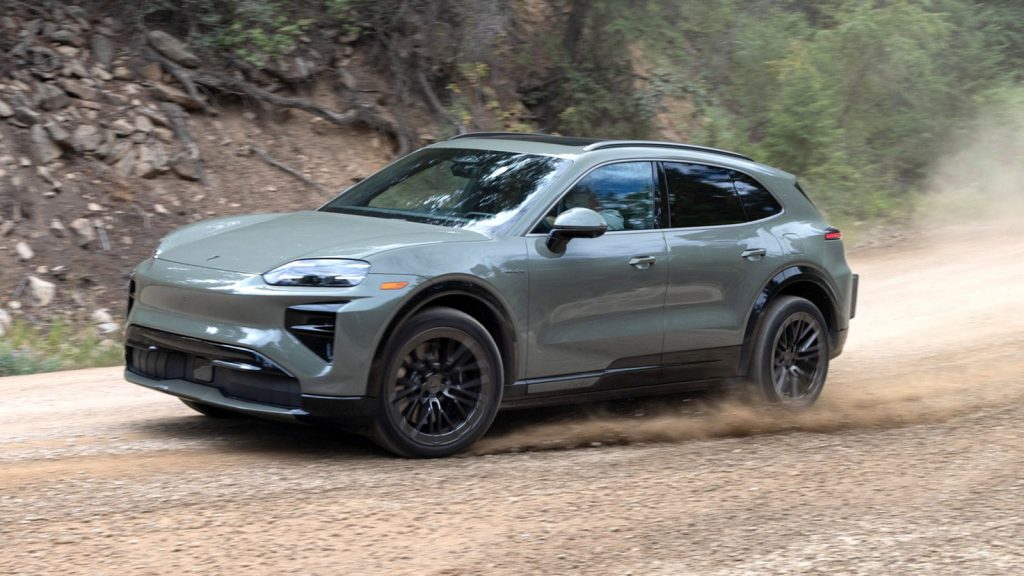
Heavy vehicle weight has long been considered the natural enemy of modern sports car dynamics, yet high-performance luxury EVs must inevitably accommodate substantial battery architecture. Rather than masking its physical footprint behind artificially lightened steering and harsh dampening, Porsche’s new flagship electric SUV takes a radically transparent engineering approach.
This hands-on review explores the performance capabilities, charging efficiency, and chassis engineering of the Porsche Cayenne Turbo Electric and base models across demanding high-altitude Colorado terrain. It highlights how Porsche leverages advanced hydraulic suspension systems, modular battery construction, and over 1,100 horsepower to deliver a balanced, confidence-inspiring driving experience for performance luxury EV buyers.
Unprecedented Output Meets Skateboard Platform Efficiency
The transformation of the Cayenne lineup brings extraordinary performance numbers to Porsche’s top-tier production vehicles. Two decades ago, the original 955-generation Cayenne Turbo generated a formidable 450 horsepower from a twin-turbo V8. The modern Cayenne Turbo Electric more than doubles those figures, pushing up to 1,139 horsepower during Launch Control and serving up 1,106 lb-ft of instantaneous torque.
To manage this output, the vehicle integrates a 113-kilowatt-hour battery pack, dual motors, standard Active Ride suspension, and an electronically controlled rear differential clutch-pack. Aerodynamic refinements further support high-speed stability and energy conservation. Active front air intakes, extending rear side blades, and a smooth underbody diffuser yield a 0.25 coefficient of drag for the standard SUV body style, while the lower roofline of the Coupe variant lowers that metric to 0.23.
Technical Specifications: Cayenne Electric Trims vs. Benchmarks
| Vehicle Model | Peak Horsepower | Maximum Torque | Curb Weight | Base MSRP (USD) |
|---|---|---|---|---|
| Cayenne Turbo Electric | 1,139 hp (Launch) | 1,106 lb-ft | 5,695 lbs | $163,000 |
| Cayenne Electric (Base) | 435 hp | 615 lb-ft | ~5,605 lbs | $109,000 |
| Macan Electric (Base RWD) | 335 hp | 415 lb-ft | ~5,000 lbs | $82,650 |
| 2006 Cayenne Turbo (Gas 955) | 450 hp | 457 lb-ft | 5,200 lbs | Historical |
Modular Battery Design and Serviceability
Unlike bespoke hypercar powertrains, the Cayenne Electric balances raw force with practical long-term ownership considerations. The main 113-kWh battery houses 192 individual cells grouped into six liquid-cooled modules. Porsche positioned key control units on the exterior of the battery housing, allowing technicians to service internal components without removing the entire floor from the vehicle chassis.
Thermal management and charging capabilities are optimized for extended road trips across variable elevations:
- EPA-Estimated Range: Up to 298 miles for the Turbo trim in standard configuration, with optional efficiency tire packages adding up to five miles.
- DC Fast Charging: Uses a standard NACS port with CCS adapter compatibility, adding roughly 10 percent charge (34 miles of range) in nine minutes during field testing.
- Inductive Charging: Designed for wireless home charging, anticipated for North American availability in upcoming production cycles.
Chassis Mastery: How Active Ride Handles 5,695 Pounds
Weight management remains the defining dynamic story of the Cayenne Turbo Electric. Tipping the scales at 5,695 pounds, the SUV outweighs its 2006 gas-powered predecessor by roughly 500 pounds. However, Porsche’s optional Active Ride hydraulic roll control system manages body motion without introducing harshness.
Instead of fighting the vehicle’s mass with overly stiff springs or light, disconnected steering, the system works alongside progressive dampening and tight steering ratios. Driving over loose gravel and high-altitude mountain passes reveals balanced traction limits. Even on optional 22-inch wheels fitted with Pirelli P Zero R Elect tires, the chassis allows predictable weight transfer around high-speed bends while maintaining exceptional cabin isolation in Comfort mode.
Interior Ergonomics and Cargo Utility
Inside the cabin, Porsche combines classic sports car elements with modernized digital interfaces. Drivers grip a steering wheel pulled directly from the 992-generation 911, complemented by a curved center infotainment display and physical knurled aluminum controls for climate adjustments and volume. An optional passenger dashboard screen provides real-time altimeter and navigation data.
Practicality remains a major advantage over smaller luxury crossovers:
- Rear Cargo Volume: Offers 56.1 cubic feet with rear seats folded flat.
- Front Trunk Storage: Features a dedicated frunk measuring 0.2 cubic feet larger than the compact Macan EV.
- Daily Comfort: Acoustic glass and customizable interior driving modes maintain ultra-quiet cabin acoustics across rough road surfaces.
While the base single-motor Cayenne Electric starts at $109,000 (reaching $139,440 as tested), higher-tier Turbo models begin at $163,000 and can reach $197,820 with full performance options. For drivers seeking maximum power and refined suspension engineering, Porsche’s newest electric SUV sets a practical benchmark for how heavy high-performance EVs should behave on open roads.
Frequently Asked Questions
What is the maximum horsepower output of the Porsche Cayenne Turbo Electric?
When using Launch Control, the Cayenne Turbo Electric generates up to 1,139 horsepower and 1,106 lb-ft of torque from its dual-motor all-wheel-drive powertrain, making it the most powerful production Porsche to date.
How does Porsche improve battery maintenance on the Cayenne Electric?
The 113-kWh battery consists of 192 cells divided into six individually liquid-cooled modules. Porsche placed the primary electronic control units on the exterior of the pack, allowing technicians to service key components without dropping the complete battery structure from the chassis floor.
How much cargo space does the electric Porsche Cayenne offer compared to the Macan Electric?
The Cayenne Electric SUV provides up to 56.1 cubic feet of cargo capacity with the rear seats folded, compared to 47.6 cubic feet in the Macan EV. The front trunk (frunk) on the Cayenne is also slightly larger by 0.2 cubic feet.