
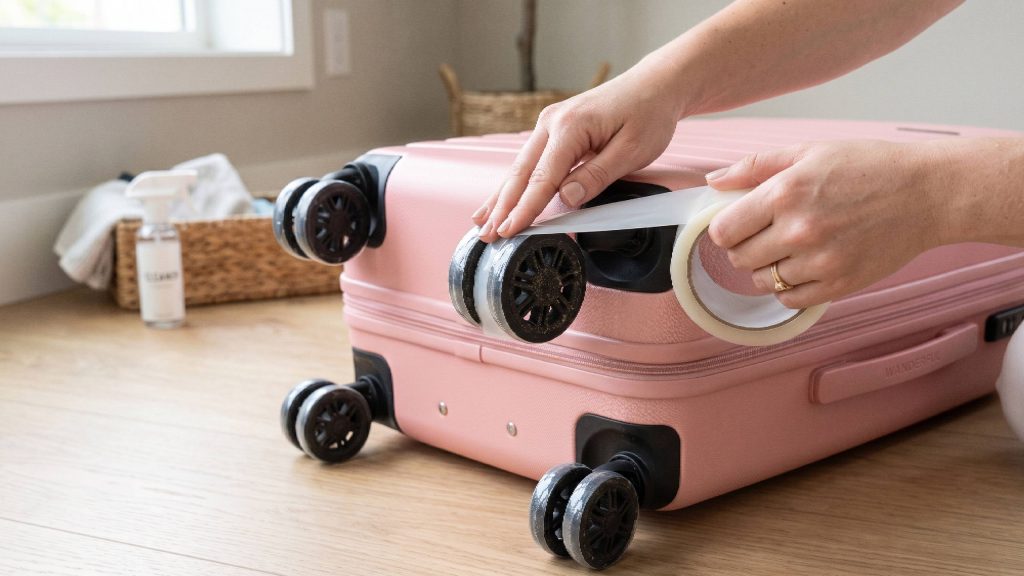
Navigating airport concourses, uneven cobblestone streets, and rough concrete sidewalks can quickly wear down the caster wheels on your favorite luggage. Over time, constant friction causes the rubber or plastic treads to crack, flatten, or degrade long before the rest of the bag shows any signs of wear.
Applying a simple protective layer of durable tape to your luggage wheel treads before travel creates a sacrificial barrier against heavy abrasion and grime. This budget-friendly maintenance habit extends the lifespan of rolling suitcases for frequent travelers, preventing premature hardware failure and saving you from costly luggage replacements.
Choosing the Best Tape for Luggage Protection
Not all adhesive tapes perform well under the extreme friction and dirty conditions of travel. Selecting a tape with the right balance of durability and adhesive strength ensures your wheels remain protected without jamming during transit.
| Tape Type | Durability & Resistance | Residue Level | Verdict |
|---|---|---|---|
| Duct Tape | High friction and moisture resistance | High (Sticky residue) | Recommended |
| Self-Fusing Silicone Tape | High elasticity and wear resistance | None (Sticks to itself) | Highly Recommended |
| Painter’s Tape | Moderate durability | Low residue | Acceptable for short trips |
| Electrical Tape | Low heat resistance; stretches thin | Moderate residue | Use with caution |
| Masking Tape | Tears easily when wet or rubbed | Low residue | Not Recommended |
Duct tape offers maximum toughness and withstands wet conditions, though you will need to clean off adhesive residue after your trip. Self-fusing silicone tape is another exceptional choice because it bonds to itself without leaving sticky glue behind, creating a rubbery cushion over the treads.
Avoid thin paper-based options like masking tape. They tear apart rapidly upon contact with wet surfaces or rough gravel, leaving your wheels exposed midway through your journey.
How to Correctly Apply Tape to Suitcase Wheels
Proper application is essential to ensure the tape stays intact without interfering with the rolling mechanism. Taking two minutes to prep the wheels before wrapping guarantees optimal performance.
- Clean the Treads: Wipe down each wheel with a damp rag to remove grit, dirt, and oil. Allow the plastic or rubber surface to dry fully so the adhesive sticks properly.
- Wrap the Tread Only: Carefully apply one to two tight layers of tape around the outer circumference that touches the ground.
- Clear the Axles: Keep tape entirely clear of the center axles, wheel housings, and swivel joints. Covering moving parts will cause the wheels to lock up.
- Test the Rotation: Spin each wheel manually after taping to verify smooth motion. The tape should turn with the wheel without catching on the frame.
Post-Trip Maintenance and Tape Removal
Peel off the worn tape as soon as you return home from your trip. The tape should look scuffed or dirty, which proves that it absorbed the damage instead of your actual wheel treads.
If duct tape leaves a sticky film behind, wipe the tread down with a small amount of isopropyl alcohol or a gentle household cleaner. Inspect the underlying rubber for cracks or flat spots before storing your suitcase for your next flight.
Frequently Asked Questions
Will wrapping tape around luggage wheels prevent them from rolling smoothly?
No, as long as you wrap only the outer tread area. Keeping the tape away from the axle, side hub, and swivel mechanism ensures the wheels continue to spin and pivot freely.
How do I remove sticky duct tape residue from my wheels?
You can easily lift leftover adhesive residue by rubbing the wheels with rubbing alcohol, warm soapy water, or a specialized adhesive remover on a soft cloth.
Can I leave the protective tape on my suitcase permanently?
It is best to remove and replace the tape after every trip. Leaving worn, dirty tape on the wheels can cause grime to collect and harden, making future removal much harder.